
 Deutsch


In the recycling industry, oil skimmers play a crucial role in separating oil and other floating contaminants from water and process fluids. They contribute to the efficiency of recycling processes, compliance with environmental regulations, and cost reduction. Here are the key aspects of using oil skimmers in the recycling industry:
Applications of Oil Skimmers in the Recycling Industry
Waste Oil and Emulsion Treatment
- In recycling facilities for waste oil or metalworking emulsions, oil skimmers remove oil from water or other process fluids to recover reusable materials.
- This step is essential to separate water and oil fractions cleanly, ensuring proper recycling of both.
Scrap Processing
- During the processing of scrap (e.g., car parts, machinery), oil-laden materials like engines or hydraulic components are often handled.
- Oil skimmers remove oil from wastewater generated during the cleaning or washing of scrap materials.
Plastic Recycling
- In plastic recycling, especially with materials contaminated by oil, grease, or lubricants, oil skimmers are used to remove these contaminants.
- The cleaned water can then be reused in the process.
Paper and Cardboard Recycling
- In the paper industry, water is used to clean waste paper, which is often contaminated with oils and ink residues.
- Oil skimmers remove these substances before the water is returned to the recycling process.
Tire Recycling
- When crushing and washing old tires, oily residues from the rubber mix or lubricants are generated.
- Oil skimmers separate the oil, making the water reusable for further processing.
E-Waste Recycling
- The dismantling and processing of electronic devices generate oil-laden wastewater, particularly during the cleaning or crushing of components.
- Oil skimmers ensure the efficient removal of oils and lubricants, helping to maintain a clean process.
Benefits of Oil Skimmers in the Recycling Industry
Resource Conservation
- Oil skimmers help recover valuable raw materials like waste oil or lubricants, which can be reused or sold.
Water Conservation
- Cleaned water can be reused in the recycling processes, reducing water consumption and minimizing waste.
Environmental Protection
- The use of oil skimmers prevents oil from being released into natural waters or groundwater, ensuring compliance with strict environmental standards.
Cost Efficiency
- By reducing waste volumes and recovering valuable materials, oil skimmers help lower operational costs.
Improved Process Efficiency
- Clean process fluids enhance the efficiency and longevity of recycling equipment, reducing maintenance intervals and increasing productivity.
Types of Oil Skimmers in the Recycling Industry
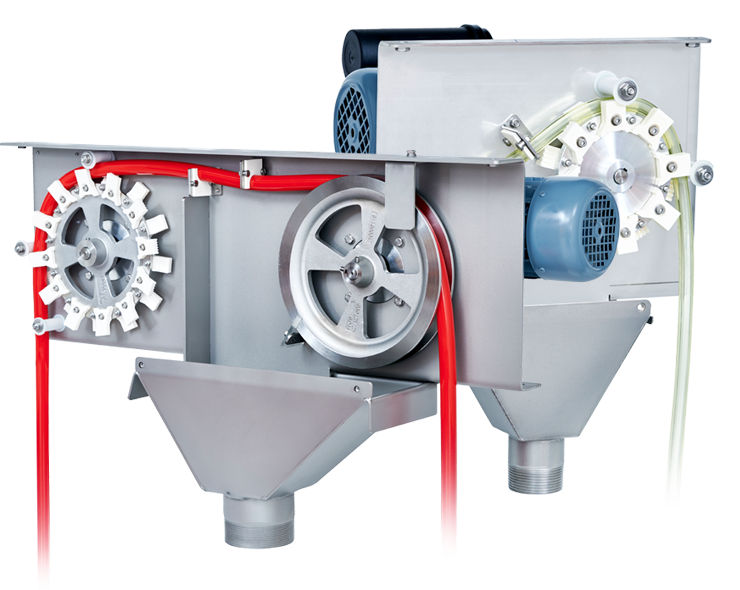
Belt Skimmers
- Compact and efficient, ideal for use in narrow collection basins or tanks where space is limited.
Disc and Drum Skimmers
- Particularly suited for large volumes of floating oil. They are commonly used in waste oil recycling facilities.
Brush Skimmers
- Effective for handling viscous or sticky oils, such as those encountered in scrap processing or tire recycling.
Tube Skimmers
- Flexible and mobile, ideal for hard-to-reach areas or floating liquid surfaces that move or change.
Vacuum Skimmers
- High-capacity skimmers designed for heavily contaminated water or emergency situations.
Use Case Examples
Waste Oil Recovery
- Oil skimmers remove residual water from collected waste oil before it is further processed or recycled.
Vehicle Recycling
- During the dismantling of vehicles, oil skimmers remove oil from the water generated when cleaning engines and transmissions.
Industrial Metal Recycling
- Lubricants and emulsions from metalworking are separated before the water is returned to the production process.
Plastic Washing Plants
- Oil skimmers remove lubricant residues from wash water, ensuring proper separation of plastics during recycling.
Challenges and Solutions
Challenge: Different Types of Oil
- Emulsified or viscous oils can be challenging to separate.
- Solution: Specialized brush or high-performance skimmers are ideal for handling these types of oils.
Challenge: High Contamination Levels
- Water with heavy contamination requires high-capacity skimmers.
- Solution: Vacuum or drum skimmers with high capacity are used to handle large volumes of polluted water.
Challenge: Limited Space
- In narrow collection basins or tanks, space can be constrained for skimming systems.
- Solution: Compact tube or belt skimmers are ideal for such confined spaces.
Conclusion
Oil skimmers are essential tools in the recycling industry, enabling the efficient separation of oil and water. They not only contribute to environmental protection but also enhance the efficiency of recycling processes and help recover valuable resources. By using different types of skimmers, the specific requirements of each recycling operation can be met, ensuring smooth and sustainable operations.
Ask us!
We offer advice on oil-water separation, coolant and cutting fluid maintenance, and wastewater pre-treatment. The right solution for every requirement. Intelligent environmental management and operational cost reduction go hand in hand with us.