
 Deutsch

Oil skimmers in the food industry play an important role in removing oil and fat from wastewater, process liquids, and cleaning water. These substances often arise during food processing and can affect plant efficiency, jeopardize product quality, or violate environmental regulations. The use of oil skimmers provides a cost-efficient and sustainable solution to optimize production processes.
Applications in the Food Industry
Wastewater Treatment
- In the food industry, oil- and fat-containing wastewater is commonly generated, such as from dairies, slaughterhouses, or the production of baked goods and dough products.
- Oil skimmers remove fats and oils before wastewater enters sewage treatment plants or grease trap systems.
Cleaning Processes
- Cleaning machines and equipment often result in fat- and oil-laden cleaning fluids.
- Skimmers extend the life of these fluids by removing residues.
Cooling Water and Process Water Treatment
- Oil and fat contamination in cooling or process water systems can impair heat transfer and reduce efficiency.
- Oil skimmers help remove these substances continuously, ensuring the proper function of systems.
Grease Traps in Large Kitchens and Catering Businesses
- Skimmers work in conjunction with grease traps and increase their efficiency by continuously removing fat and oil from the surface.
Fried and Baked Goods Production
- The production of fried foods (e.g., French fries, chips) generates oily wastewater.
- Oil skimmers separate excess oil, which can be reused or disposed of.
Processing Meat, Fish, and Dairy Products
- These sectors produce especially high amounts of oil and fat, which would otherwise burden wastewater and production systems without skimmers.
Benefits of Oil Skimmers in the Food Industry
Compliance with Legal Regulations
- Many countries set strict limits on fat and oil concentrations in wastewater.
- Oil skimmers help meet these limits and avoid fines.
Improved Plant Efficiency
- Fat and oil can cause blockages, deposits, and corrosion in pipelines and machinery.
- Skimmers reduce these risks and extend the lifespan of the equipment.
Cost Reduction
- Reduction in the cost of disposing of fat and oil.
- Extended lifespan of cleaning and process fluids.
Hygienic Production
- Oil skimmers ensure clean production conditions, improving food quality and adherence to hygiene standards.
Sustainability
- The recovery of fat and oil enables their reuse, e.g., for energy production or as raw material in other industries.
- Reduces environmental impact by ensuring clean wastewater.
Types of Oil Skimmers in the Food Industry
Belt Skimmers
- An oleophilic belt collects fat and oil from the surface of the liquid.
- Ideal for smaller tanks or basins in cleaning processes.
Disc Skimmers
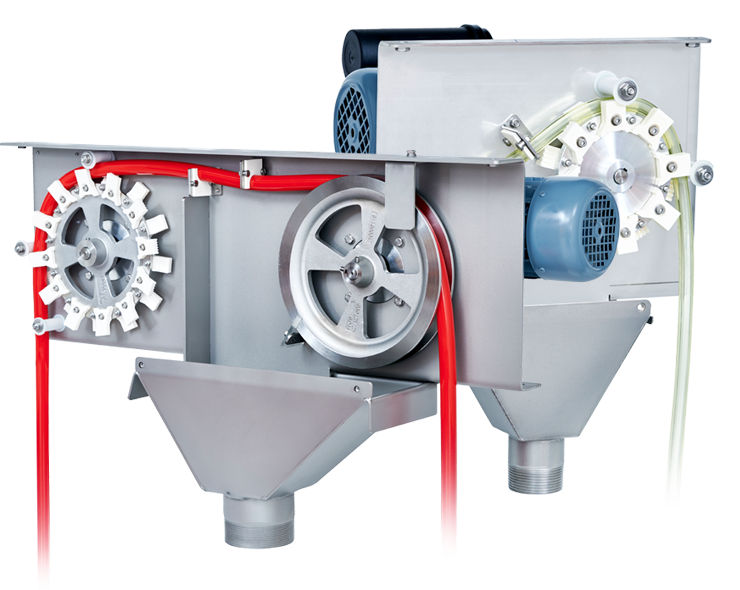
- Rotating discs pull oil from the surface and transport it to a scraping device.
- Particularly suited for applications with moderate oil and fat concentrations.
Tube Skimmers
- Flexible tubes collect oil and fat even in hard-to-reach or irregularly shaped basins.
- Effective for varying fat concentrations.
Floating Skimmers
- Floating devices remove larger quantities of oil and fat from open water surfaces.
- Used in wastewater basins or large process plants.
Vacuum or Suction Skimmers
- These systems suck thick or viscous fats directly from the surface.
- Suitable for applications with high fat concentrations.
Challenges and Solutions
Challenge: Fat Deposits with High Viscosity
- Solution: Use specially designed skimmer systems that can efficiently handle viscous fats.
Challenge: Combined Fat and Solid Contaminants
- Solution: Combine oil skimmers with filters or solids separators.
Challenge: Lack of Space in Production Facilities
- Solution: Use compact and retrofittable skimmer designs, such as belt skimmers or disc skimmers.
Challenge: Hygiene Requirements
- Solution: Use skimmers made from food-safe materials, such as stainless steel, that are easy to clean and maintain.
Examples of Applications
Dairies
- Oil skimmers remove fat from wastewater generated during the processing of dairy products like butter, cheese, or cream.
Meat and Fish Processing
- In slaughterhouses and fish processing plants, skimmers significantly reduce fat contamination in wastewater.
Frying Operations
- Excess frying oil is removed from cleaning water and process waste.
Beverage Production
- Wastewater from cleaning processes in bottling plants is cleaned using oil skimmers.
Bakeries and Confectioneries
- Fat and oil are removed from process liquids during dough and baked goods production.
Conclusion
Oil skimmers are indispensable in the food industry for effectively removing fats and oils from wastewater and process liquids. They help comply with legal regulations, reduce costs, and contribute to sustainability, while improving food quality and hygiene in production. Their use is a key component of modern, environmentally friendly food processing.
Ask us!
We offer advice on oil-water separation, coolant and cutting fluid maintenance, and wastewater pre-treatment. The right solution for every requirement. Intelligent environmental management and operational cost reduction go hand in hand with us.